Monday, December 16, 2013

Correction

A recent magazine article I wrote mistakenly directed people to follow my
travels on this blog. Please feel free to read, but this is an experimental
brainstorm for some of my theological ideas. The blog about my life on
the road and my travels across America by foot can be found here:

Thank you for your interest!


Sunday, November 17, 2013

The Word About Love

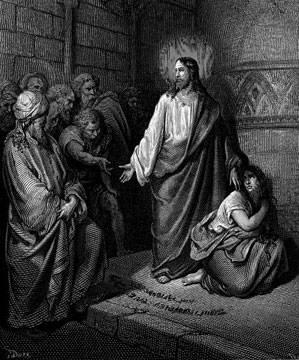
Two thousand years ago a group of prominent religious leaders challenged Jesus with a test which they hoped would unravel His teachings or expose an inconsistency in his actions. They asked Him “Which is the first commandment of all?”(Mark 12:28) These were men who had studied, memorized, taught, and enforced the Scriptures and Jewish laws since childhood. They had constantly debated each other for years over which laws were greater than others. They were confident that no matter what Jesus answered they could immediately twist it against Him and use it to win His followers back to themselves. The question (though intended as a trap) is still an important question today. Honestly, what is the first or the greatest commandment? Is it even possible to come up with a single command that trumps all the others or sums up morality?
Jesus answered, “You shall love the Lord your God with all your heart, and with all your soul, and with all your mind.  This is the great and foremost commandment. The second is like it, you shall love your neighbor as yourself. On these two commandments depend the whole Law and the Prophets."  ~Matthew 22:37-40 (see also Mark 12:30)
Without hesitation Jesus explained that the greatest commandment in all Scripture was the command to love God with heart, soul, and mind (Deut.6:5), and the second was to love others as generously as we love ourselves (Lev.19:18). Jesus didn’t just put this command at the top of the list of commands; He clearly stated that this command to love actually sums up all moral commands. He said, “On these two commandments depend the whole Law and the Prophets.”(Mat. 22:40) If we were to forget all other rules and follow only this command to love, we would be perfect. Anything that is a sin, is only a sin because it is a failure to love God or others.
Traditionally, church leaders and philosophers have taught such a confusing network of arbitrary religious rules that this ultimate command has been lost, forgotten, and even denied as the baseline standard for right and wrong. Many complicated standards and formulas have been invented for holiness; most serve a particular political entity or religious agenda. Many of them project an appearance that looks commendable, feels righteous, and even seems to match up with many of the same imperatives found in Scripture, but the fatal flaw of all these systems is that they are not based on the ultimate principle of love that Jesus taught. No religion should be allowed to call itself “Christian” when it deviates from the teachings of Christ, but it often seems that the entire system of Christianity has abandoned the teachings of Jesus! He didn’t preach angry sermons against the government, or the entertainment industry; He didn’t even rail against drinking, smoking, profanity, or gambling. Whenever Jesus got upset, it was always because of conservative religious people within His own faith! His harshest words were directed against those who re-interpreted the Bible into a system of rules. (See Matthew 23)
There were many Jewish denominations in Jesus’ day. The Pharisees, Sadducees, and Essenes were among the most common, but Jesus did not promote any of them. Instead He taught something that none of them were getting right, He said, “A new command I give you: Love one another. As I have loved you, so you must love one another.” (John 13:43)  Saint Paul learned from Jesus and studied His teaching and wrote at least 13 of the books in the Bible. Based on Jesus’ teaching Paul often said things like “For the entire law is fulfilled in keeping this one command: "Love your neighbor as yourself."” (Gal. 5:14) and “love is the fulfillment of the law” (Rom. 13:10).
In today’s religious market things haven’t improved. There still aren’t any denominations that are getting this right. They all teach moral systems that may include love, but don’t actually hang entirely on it as Jesus taught. Ironically, the irreligious hippie movement of the seventies came closer to genuine Christianity than any church in recent memory. Today, I know of several secular movements that are doing far more social good and ethical activism than most Christian groups that I’m aware of. It’s embarassing, but I know atheists who come closer to following the teachings of Jesus than the average “Christian.”
If we take Jesus’ statements seriously, He teaches that any “good deed” is invalid if it is not done out of love, and anything done genuinely out of love (for God first and other’s second) must be holy (granted, that’s a very limiting factor). This does not compute in the mind of today’s religions. It’s too permissive, flexible, tolerant, free, and liberal. It doesn’t protect the institutions of religion so the naked message of Jesus is clothed in religious vestments that cover up what He said. Instead they take the minor applications that He gave for specific situations and they blow those out of proportion to create a version of “Christianity” that is fundamentally the opposite of what He stood for!

If we are ever going to regain the purpose of what Jesus taught and actually become worthy of calling ourselves Christians, we need a completely different concept of morality and faith. Pure, naked Christianity isn’t about doing “good” works verses “bad” works. That is a false teaching that has been used by the religious elite to control our lives and manipulate culture(Sometimes well-meaning, but still misguided); there is nothing “Christian” about that formula. Naked Christianity is a life driven by selfless love. Jesus gave us a perfect example of that love. Others gave us very good examples and instructions about how to apply the principle of love, but as soon as we start listing those examples and instructions into a method or formula for holiness, Christianity gets lost behind liturgical vestments that hide the entire point Jesus tried to teach.

Friday, October 25, 2013

The Word About The Fear of God

     The Bible has two main sections, the "Old Testament" that the ancient Jews have had for thousands of years, and the "New Testament" written by the disciples of Jesus after His life. If you're anything like me, you have a hard time with the Old Testament . It covers four thousand years of Jewish history and religion before the life of Jesus and it doesn't exactly read like a Marvel comic book. It takes a patient trained eye to get the full benefit, so many people are quickly turned off by the unusual wording, ancient history, and portions of unsavory content.

     There's just one main theme from the Old Testament that I think will help me explain what God was trying to communicate and it is an important foundation for everything that I'm going to be saying in future posts. If you stick with me on this one, it will help you understand and appreciate the Bible as a whole.

     It's easy to miss the significance of the Old Testament, but Jesus understood what it was saying and everything He taught came from those ancient manuscripts. He had the wisdom to perceive the real message of love, trust, and peace behind the ancient Hebrew words. I've been studying the Bible off and on for most of my life now and I've been trying to understand the "big picture." Here is my "nutshell" explanation of what I've learned.

     Unfortunately, it’s an idea that is not easily summed-up in a single English word. Jesus spoke of it in human terms like “love” or “faith” and the English translations of the Old Testament referred to it as the “fear of God.” Basically, it boils down to our attitude toward God. Loving Him and trusting Him are part of it, but the Old Testament word “fear” is part of it too. Obviously “fear” is the English translation, but it's not a perfect translation. There really isn't an exact parallel in English to explain what the original Hebrew word meant. We are not expected to fear God as we fear a psychopath or a wild predator, but if we understand who He is, we will take Him very seriously. When the Bible talks about the fear of God, essentially it means taking Him seriously. He is the powerful Creator who designed and manufactured every molecule of the entire universe, so He has the ability and the right to do whatever He wants. He is also holy, pure, and completely uncompromising. For those who purposely live a wicked life "terror" would be a good word; for those who love and trust God, "respect" would be an understatement, but it's the closest we can get.

     We humans have a sorted reputation of senseless wars, dishonesty, and arrogance. If you had committed crimes against a government, it would affect your attitude toward the police force of that country. If you were standing on trial for your life, you would be extremely respectful and you would hope for mercy and forgiveness. This is what it means to “fear God.” It means to understand that even the best of us are occasionally guilty of lying, cheating, stealing, and betraying the holy Creator. He may be forgiving, loving, and generous, but it is not our place to take that for granted or act as if we deserve it. If a child knows that he is loved by his father, he will wisely fear the discipline for his foolish choices, because a loving father will not allow his child to self-destruct without correction.

     And this is why so many people hate Christianity and the idea of God. They don’t want to be forgiven because they don’t want to admit that they have done anything wrong. They don’t want to follow God’s wisdom because they want to prove their own superiority. They have never truly loved anyone with selfless, unconditional love, so they are not able to understand that God loves them and is trying to guide them into a life of love, joy, and peace.

     There is a reason why the Old Testament has so many stories of violence and suffering. For thousands of years, God gave the Jewish people laws that would help them to have a society of peace and prosperity, but they never really trusted Him. They rejected His wisdom and love. They followed other religions that had them burn their babies alive as sacrifices and they practiced every form of rebellion against the helpful instructions that God had lovingly given them. The wars and suffering and violence were the natural consequences which they brought on themselves. Because they did this over and over again, the Old Testament has many sad stories like this, but Jesus recognized that this was not the main point of God’s message. This was the unfortunate result of the people’s rebellion against Him. God wanted love, joy, and peace but the people did not trust His recipe.

     Ultimately, human kind would never trust God’s love. We are too stubborn, blind, and selfish to see the wisdom of His instructions. We would rather deny His existence, demand our independence, and self-destruct in the process. So after four thousand years of religious rules, God started phase two. It was a completely different approach to saving His people from the foolishness of their own decisions. Instead of rules, He introduced salvation by grace. He reduced himself to a single cell and implanted in the uterus of a virgin named Mary. Many prophecies foretold His coming in detail right down to the date and the village, but when He came no one was paying attention. We sent our God to be born in an animal pen.

     The thought of a holy, infinite God, creator of the universe, doing something so incredibly… unsanitary is hard to reconcile, but Jesus went on to live an equally humble life. He worked hard and won the respect and admiration of all who knew Him. For the first thirty years of His life Jesus didn't say a word about who He really was. No one suspected that the very God who authored their Scriptures, designed their anatomy, and built the ground they walked on was passing them on the streets. But why? Why would God lower Himself into the sewer of humanity and wear one of our weak, decaying bodies? He came to be our substitute because He loved us.

     It was obvious humanity would never change its rebellion against God. By rights we deserved to be
punished severely. Just as a good judge cannot justly overlook crime, God could not ignore our sin without becoming unjust Himself. Justice had to be done, but in His love God couldn't bear to do it without giving us one final chance. That chance involved sacrificing Himself and dying to save us. By coming to earth and living a perfectly righteous life He gave us a last-minute escape from the eternal hell we rightfully deserve. When Jesus was crucified on the cross He experienced a spiritual punishment far deeper than the pain of the nails and the whips. He experienced the full punishment of our sin. Our guilt was transferred to Him, and because He had lived a perfect life, His righteousness was made available to us. It was essentially an identity swap. He took our identity long enough to pay the punishment, and He offered us His identity with all its holiness and privilege.

     This is what Scripture calls the “gospel;” the good news that gives hope when there was no other way for us avoid hell. Three days after His death, Jesus came back to life proving that He had broken the curse of sin. Complete forgiveness and pardon was finally available to anyone who simply trusted and accepted the substitution of Jesus on their behalf.

     Many people don't accept any of this. They reject the forgiveness of God and hope the Bible isn't true. They don't want to believe that they are sinners who need God's forgiveness, so they hope all that stuff about eternity in hell isn't true either. Based on solid evidences and personal experience, I am convinced the Bible is God's message to us and that it is true. According to the Bible those who are humble enough to admit their sin, and accept Jesus’ forgiveness will enjoy a fulfilled life on earth and heaven to follow. Chose carefully.

     A lot of things changed after Jesus did all this. The old Jewish rules were no longer needed for holiness because we already had the holiness of God available for the free taking. But at the same time, many of the rules that existed for our own good are still good for us. The New Testament recounts the life of Jesus and also the teachings of His closest followers who wrote down what He taught. These writings are no longer laws to make us holy, instead they are wisdom to help us enjoy life to the fullest. Because God is rightfully in charge, these instructions are still authoritative, and to rebel against God is still sin, but there is a new motivation behind these laws. The new motivation is love, and love is the central concept of Jesus’ teaching and all of the New Testament. Everything in the New Testament revolves around the concept of love and Jesus taught that all the requirements of God can be reduced to the principle of love. Jesus’ teaching about love will be the topic of my next post. I believe that loving God is a continuation of the Old Testament concept of fearing God. This post is meant to be an introduction to that so stay tuned! 

Monday, October 14, 2013

Introduction

     In the fall of 2012 I sold, gave away, or threw out most of my belongings and started a journey on foot. I didn’t set out for a destination, but rather for an understanding. The geographical journey gives me a tangible expression of the spiritual journey I’m on. It keeps me focused. It gives me a real-world context to process and internalize the spiritual lessons that I am learning about God, the Bible, and myself. The ancient texts of Christian and Jewish writings have meant increasingly more to me as I’ve grown to understand and trust them, but I still have so many questions and so much more I hope to learn. I’ve been trying to study the Bible more in my free time, but the complications of life, employment, and the American dream have kept me distracted and spread too thin. This geographical journey is meant to simplify my life so that I can focus intently on getting my beliefs straight in preparation for whatever comes next in my life; like a modern-day Pilgrim’s Progress. If I can reach a better understanding of what I believe and why, I will be better prepared to fulfill my purpose; whatever that may turn out to be.

     My first blog www.walkabouttheword.blogspot.com has been a running chronicle of my travels and the many adventures along the way, but I’ve written very little about my spiritual journey or the burning questions on my heart about God and my faith. This blog is meant to explore the spiritual issues that I am working through as I travel. I’ve written hundreds of pages of material over the past years, but I’ve never published them openly for the public. My hope is that people who read this blog will comment or write to me and share their perspectives on the topics I cover. I also hope that the exercise of writing these ideas out will help me to solidify my own beliefs and develop good foundations for my convictions. Too many people go around claiming to believe things without really knowing why or even understanding what they believe like blind religious drones. I crave more than that. I welcome honest criticism from anyone. I realize that some of my readers will not share my faith or my trust in the Bible, but I still welcome comments and criticism from all perspectives.

     I can assure you now; this blog will be controversial and unconventional. My approach to Christianity is an attempt to remove all the cultural influences and discover what pure Christianity is, straight from the Bible, without the bias of tradition, fashion, and religion. I call it “Naked Christianity.” My aspiration is to separate what God created from the religious coverings the attempt to make Christianity fashionable to the culture while cloaking what Jesus meant it to be. What I have to say is not regurgitated traditions from other teachers; it is what I have discovered on my own from hundreds of hours of research and my own careful Bible study. Honestly, my perspective of Christianity is unlike anything I have ever heard even after years of strict Christian upbringing, years of church and Sunday School, five semesters of Bible college training, and thousands of MP3 sermons.

     Arrogant as it may sound, I genuinely believe I’ve learned something that has been completely lost from the Bible and ignored by modern religious ideology. I’ve discovered that religion is like drug abuse. It gives a feel-good high that temporarily relieves pain, but religion is habit-forming, creates dependency, and gradually enslaves the user to itself. Just as a junky needs the fix to feel normal, many people need their religion to make them feel right with God. This religion is not real Christianity, but it makes them feel good. A pure, simple application of the Bible is not enough to satisfy the religious appetite. People want a religion that draws accolades and gives them political influence. Pure Christianity does not work that way, so it has been twisted by the church powers into a religion that can be co-opted for human agendas. This has been going on since the beginning of Christianity.

     After two thousand years of this corruption it is very hard for us to recover uncontaminated Christianity or identify which beliefs are genuinely from the teachings of Christ and which beliefs have been layered on since then. The problem with worldly fashions and ideas is that they obscure God’s original design. We humans are quick to add frills, bows, and coverings to our Christianity so that the original is eventually hidden behind our religious vestment and is soon forgotten. But what would naked Christianity look like? What if we didn’t put a frock on it or hide it under religious vestments? What if we allowed it to remain exactly the way God created it without trying to dress it up? Would we be able to resist the urge to cover up the parts of Christianity that are not socially acceptable or politically correct? If Christianity was going naked in public without traditional fashions, would we still want to call ourselves Christians or would we distance ourselves from it?

     Undressing Christianity down to the original body of biblical teachings will make many Christians very uncomfortable. Naked Christianity is very improper today just as it was in Jesus’ time. Just as the religious leaders around Jesus hated Him and opposed His message, any who strip Christianity down to its original form will also be hated, marginalized, and slandered by the organized religions of our day. If I do not dress up my Christianity in the trendy styles of fashionable religion, they will react in defensive anger, mockery, and vitriolic self-righteousness. I don’t expect to win any popularity contests with this blog. I intend to expose some fallacies of religion and present a clarified perspective on the Bible and the teachings of Jesus. I hope that it will be a helpful insight for both believers and unbelievers and that these articles will give a clear picture of what Jesus actually taught before religion got involved.


     The top-right corner of this blog page has a subscription field where you can enter your email address and receive each post in your inbox. I have several topical posts that I would like to begin publishing periodically. If you are interested in thinking with me through this spiritual journey, please sign up and be prepared to ask questions, offer insights, and challenge my views along the way. Thank you for your interest and partnership with me in this journey.